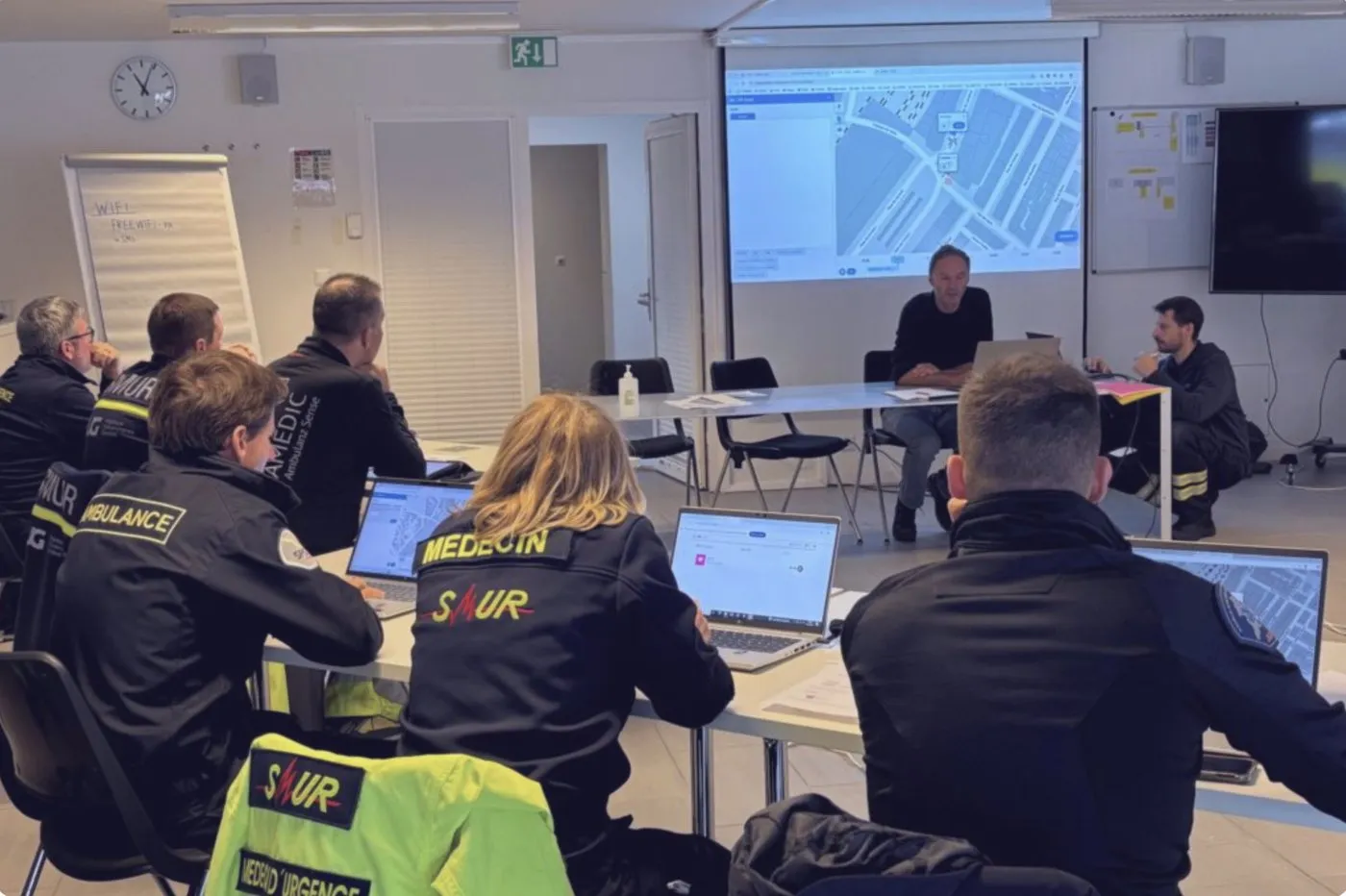
In a major incident, such as a train accident or a building fire, emergency teams must shift from individual to collective medicine. Some health professionals take on coordination roles they do not perform in their daily work. Regular training for these roles is essential.
The gap
Two types of simulation are used for training in major incident management, each with its limits:
- Full-scale exercises are realistic, but costly and complex to organise: many participants are mobilised to train only a few people in key roles. They therefore cannot meet the need for regular training.
- Existing software simulations allow repeated training, but focus on specific tasks, do not address coordination between professions and offer little flexibility in scenarios, training modes and analysis of participants’ decisions.
Project objectives
The project aimed to develop a new type of software simulation, built around three innovations:
- Flexible training modes: individual or group training, on site or remotely.
- Scenario authoring system: enable trainers without programming skills to create their own scenarios.
- Analysis of participants’ actions: support debriefing and research on the management of major incidents.