
Serious games in higher education

Project management is learned by doing, yet university students rarely get the chance to manage a real project.

Led by the University of Agder in Norway, the project explored how serious games can strengthen students’ learning in higher education. After testing the PM-Game, the university involved AlbaSim as its main partner and external expert.

Funded by the Norwegian Agency for International Cooperation and Quality Enhancement in Higher Education (Diku).

Key information

Project at a glance

Focus
Project management educationProblem-based learning
Period
2019–2020
Funding
Norwegian Agency for International Cooperation and Quality Enhancement in Higher Education (Diku)
Partners
University of Agder, Norway
AlbaSim, HEIG-VD, HES-SO

Overview

Bringing practice into project management education

Planning a project, dealing with stakeholders, making decisions under uncertainty: much of what project managers need is learned through experience rather than in lectures.

The gap

In university courses, students mainly learn methods and tools. Practical competencies and soft skills remain hard to acquire, and students have few safe opportunities to try, fail and try again.

Project objectives

Building on ten years of experience with the PM-Game, the project had three aims:

  1. Explore: assess the potential of serious games for educational innovation in university education.
  2. Test: integrate serious games into university courses and observe how they are used in class.
  3. Share: disseminate the results to the academic community.
CURRENT TEACHINGLecture-based coursesLIMITSPractical skills hard to acquireFew safe places to practiseTHE PROJECTSerious games in university courses1Workshops between universities2Games tested in real courses3Results shared with academiaGOALActive, practice-oriented learning

Outcomes

Exchanges, classroom tests and shared research

  • Exchanges between universities

    Collaboration workshops and exchanges between partner universities in Norway and Switzerland.

  • Serious games in the classroom

    Serious games used in classroom settings to test their integration into university courses.

  • Research and publications

    A systematic review, a study of ten years of PM-Game use and a book chapter share the results with the academic community.

From research to practice

A lasting collaboration with the University of Agder

The collaboration started in 2018, when Prof. Dominique Jaccard spent a week as visiting professor at the University of Agder, introducing the PM-Game in three programmes.

It has continued well beyond the project: joint publications, a presentation at the Edulearn conference and, in 2025, a chapter in a Norwegian book on practice-oriented learning and a keynote by Xavier Good at the university’s “Games and Gaming in Education” conference.
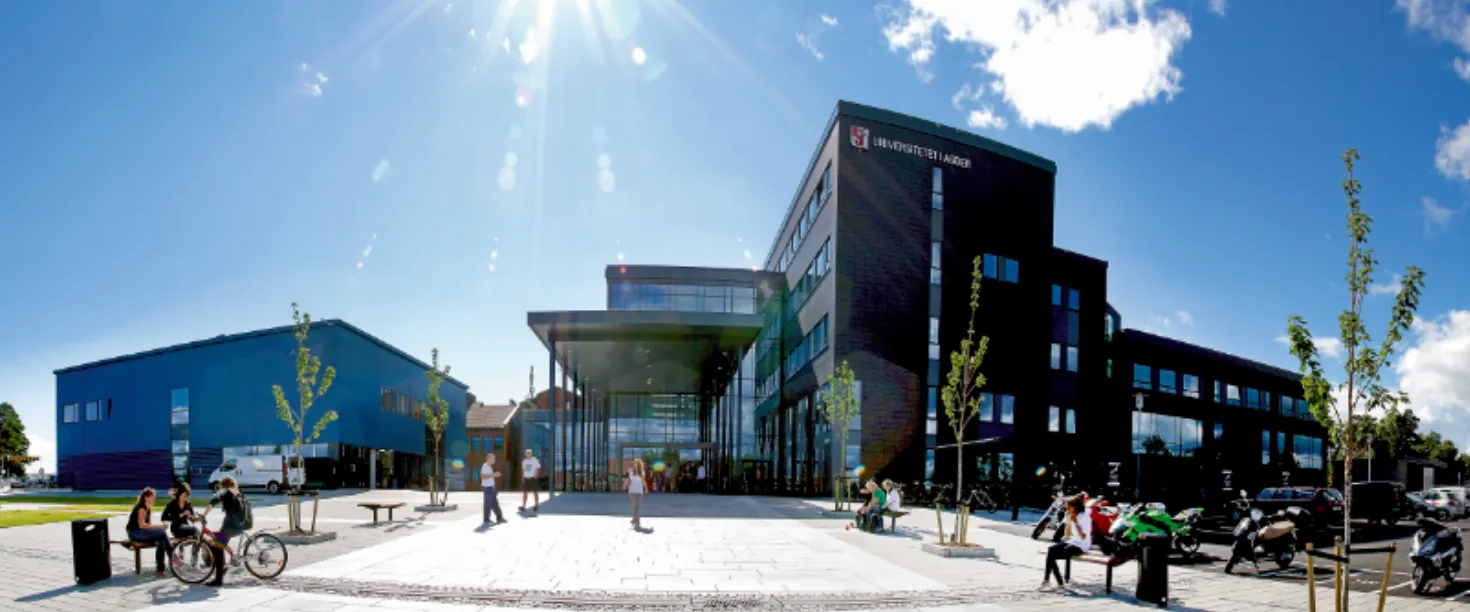

The University of Agder campus under a sunny sky

Key findings

What our research shows

  • In higher education, project management serious games are used mainly to develop skills that are hard to acquire in lectures, such as practical competencies and soft skills, and to offer a risk-free trial environment.

    Systematic review (PRISMA), 43 studies · Hellström, Jaccard & Bonnier, International Journal of Serious Games, 2023

    Read the paper(opens in a new tab)
  • Serious games can drive a shift toward active pedagogies and change the teacher–student relationship, provided they are designed and implemented as an integrated gaming and learning concept.

    Qualitative study, 10 years of PM-Game use · Jaccard, Bonnier & Hellström, Project Leadership and Society, 2022

    Read the paper(opens in a new tab)

Partners

A Norwegian–Swiss collaboration on project management education

The project was led by the University of Agder (Norway). The AlbaSim team of the Media Engineering Institute (MEI) at HEIG-VD (HES-SO), led by Prof. Dominique Jaccard, took part as main partner and external expert.

Teachers and researchers from both countries worked together on the use of serious games in their courses and on the analysis of the results.

Acknowledgements

We thank the Norwegian Agency for International Cooperation and Quality Enhancement in Higher Education (Diku, now HK-dir) for funding this project.

Collaborate with us

Interested in a research collaboration? We would be glad to discuss joint projects.
